





Railway track is the structure of railway, which is composed of track, fastener, tie, ballast and roadbed. They provide a reliable surface clearance for the wheels, allowing the train to move. Since the 1870s, rail tracks have been almost made of steel.

Types of railway tracks.
| standard | Sepc | Materials Typical Grade |
| UIC 860 | UIC 54 | 700,900A 900B |
| UIC 60 | ||
| EN13674.1 | 50E1 | R200,R350HT,R260Mn,R35LHT,R320Cr,R370CrHT |
| 54E1 | ||
| 60E1 | ||
| 60E2 | ||
| BS-11-1985 | BS80A | 700,900A,900B |
| BS90A | ||
| BS100A | ||
| AREMA | 115RE | SS,HH,LA,IH |
| 136RE | ||
| ASCE60 | U71Mn | |
| ASCE85 | ||
| GB2585-2007 | 50kg/m | U71Mn U75V |
| 60kg/m | ||
| 75kg/m | ||
| TB/T2344-2012 | 50kg/m | U71Mn,U75V,U77MnCr,U78CrV |
| 60kg/m | ||
| 75kg/m | ||
| GB11264-1989 | 8kg/m | Q235 |
| 12kg/m | Q235 | |
| 15kg/m | 55Q,Q235 | |
| 18kg/m | 55Q,Q235 | |
| 22kg/m | 55Q,Q235 | |
| 24kg/m | 55Q,Q235 | |
| 30kg/m | 55Q,Q235 | |
| 38kg/m | 50Mn,U71Mn | |
| 43kg/m | 50Mn,U71Mn |


The role of the railway track
- the rail supports the train. The rail is laid on the roadbed to form a continuous and stable track system, which can withstand the weight of the train and the dynamic force generated during operation. This structure ensures the smoothness and safety of the train.
- the rail can guide the direction of travel. The two parallel tracks of the rail define the trajectory of the train, which enables the train to book the direction in advance and ensures the accuracy of the train’s traveling path.
- the rail distributes the load pressure. When the train travels, the rail distributes the weight of the train to the subgrade and foundation, which can disperse the pressure of the load, help to maintain the stability of the track and extend the service life.
- the rail also has the function of electrical connection. In an electrified railway, the rail can be the track on which the train travels, and it can also be the channel through which the current is carried. The transmission of electric energy and the power supply of the train can be realized through the connection between the rail and the power supply system.
- the rail can adapt to the natural phenomenon of thermal expansion and contraction. The influence of temperature changes on the length and shape of the rail needs to be taken into account in the design and installation. With a suitable joint design and expansion device, the rail can maintain a stable size and shape at different temperatures.

In summary, the rail has the ability to support the train operation, guide the direction of travel, distribute the load pressure, ensure the safety of running, provide electrical connection, and adapt to thermal expansion and contraction. It is a key facility to ensure the safe and efficient operation of the railway transportation system.
how to build railroad tracks
1.Pre-construction Activities:
These may include surveying the area, obtaining necessary permits, and planning the track layout.Subgrade drainage is an effective system to prevent railway water logging. Roadbeds and railway track slopes are prone to water erosion. If the subgrade drainage measures are improper, it will lead to subgrade diseases.
2.Laying Bottom Ballast:
Set the thickness of the bottom ballast according to the design value.
The track of the main track is double track. Bottom ballast is composed of medium coarse sand.
Place the sleepers evenly on both sides of the railway track. Lay the sleeper on the track. The center point of the railway sleeper is consistent with the center line of the track.
The bottom ballast is transported to the track as planned and unloaded evenly.
3.Anchorage:
Anchorage refers to fixing railroad spikes to the railway sleepers .
These spikes hold the rails securely in place.
4.Laying Steel Rail:
Use rails with the same length deviation. The length deviation is less than 3mm, and the cumulative deviation is less than 15mm.
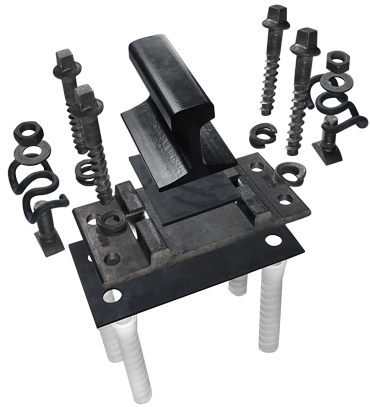
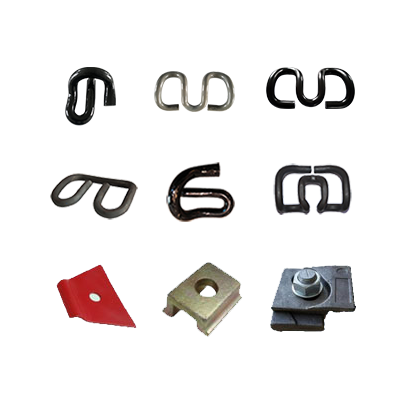
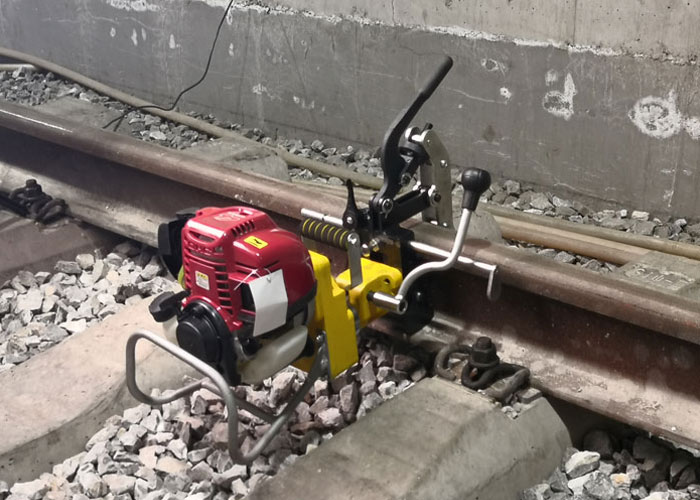
Lay the track from the rear end of the switch. The length of the non-standard rail can be determined according to the location of the insulation joint. The rail is transported by monorail, and when placed, it is connected to the sleeper by rail components such as rail fastening systems and rail joints
5.Top Ballast:
Add more ballast on top of the rails.
This helps maintain the track’s stability and prevents lateral movement of the rails.
6.Rail Anchor and Rail Brace:
Track anchors and Rail brace are installed to hold the track in place.